Improving driver verification and handoff process at Roadie Cross-docks
Results
Redesigned handoff experience to improve driver verification. Increased pickup efficiency by
50% and reduced Support escalations.
Cross-dock Overview
Roadie Cross-docks are warehouses where incoming packages are sorted into batches and get handed off
to delivery drivers for last-mile delivery within the same day.
Problem
Cross-dock employees need to verify and assist drivers during pickup. The current tool lacks
support for cross-dock employees to verify drivers reliably and handle exceptions.
How can we
improve the handoff experience to make the process smooth and efficient?
Currently, cross-dock employees manually verify the drivers by asking drivers for their Driving
License and Auto Insurance. If driver passes verification, a cross-dock employee will share the
assigned batch
information with the driver and allow them to proceed with pickup.
Where the handoff process was breaking down
To understand why pickups were slow and inefficient, I interviewed cross-dock employees, a facility
manager and an operations leader. Employees were responsible for verifying drivers, confirming
assigned inventory, and resolving pickup issues, but the tools did not support how fast decisions
had to be made at the dock.
Key breakdowns
Driver information was fragmented
Slowed down employees during peak pickup windows.
Driver verification relied on manual judgment
Created inconsistency across sites for handoff decisions.
Multi-bin pickups made assignments harder to confirm
Increased the chance of confusion during handoff.
Vehicle details were missing from the handoff decision
Made it harder to confirm whether the assigned batch fit the driver’s vehicle.
Employees had to escalate pickup exceptions to Support
Delayed pickups for issues employees needed to resolve on-site.
Pickup progress was not visible to employees
Made it difficult to identify missing items or assist drivers mid-pickup.
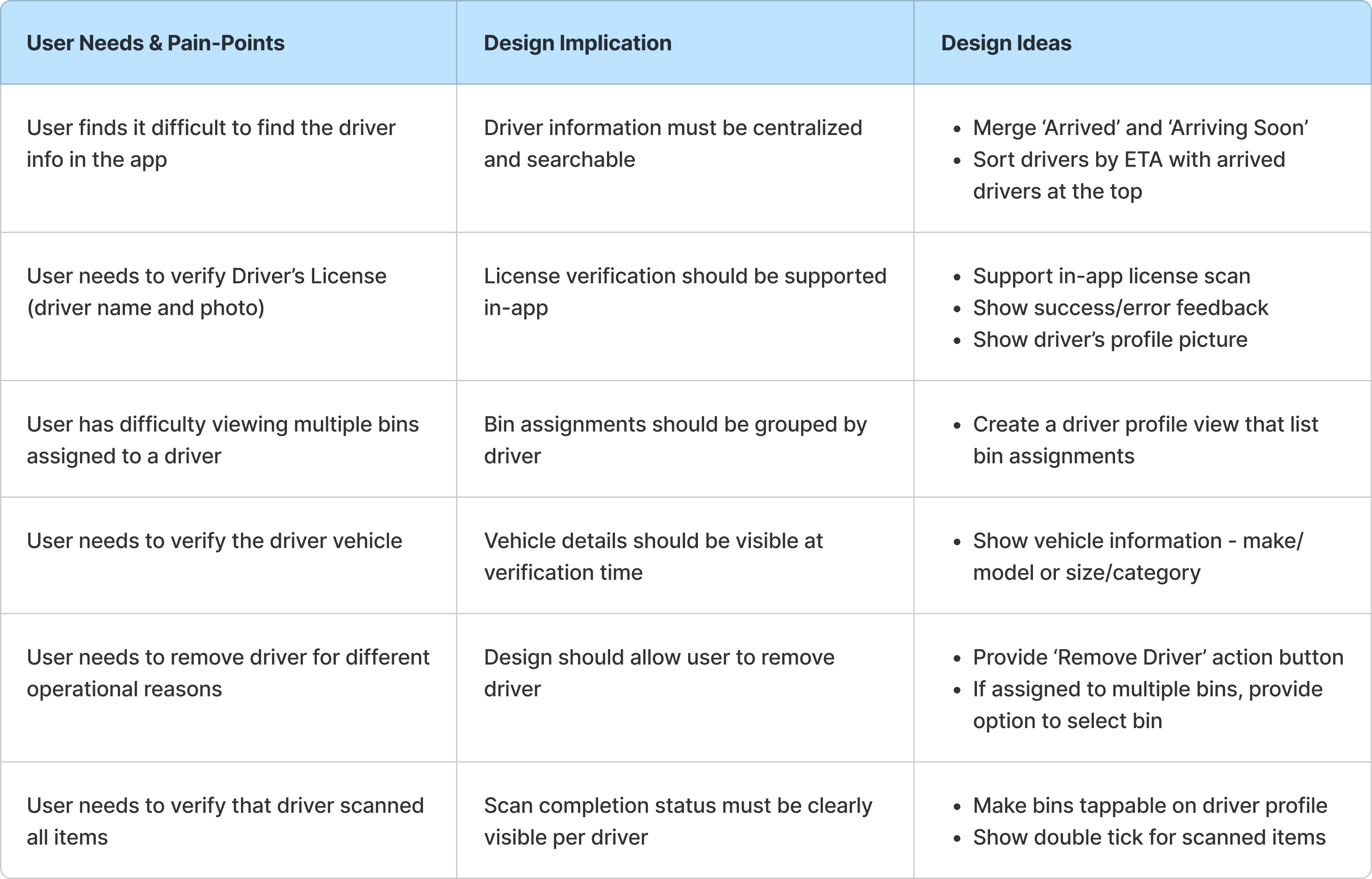
Turning breakdowns into design requirements
After identifying where the handoff process was breaking down, I translated each operational issue
into a design requirement. The goal was to centralize pickup information, improve the verification
process and reduce manual judgement and give employees the tools to resolve common issues.
Exploring verification flows
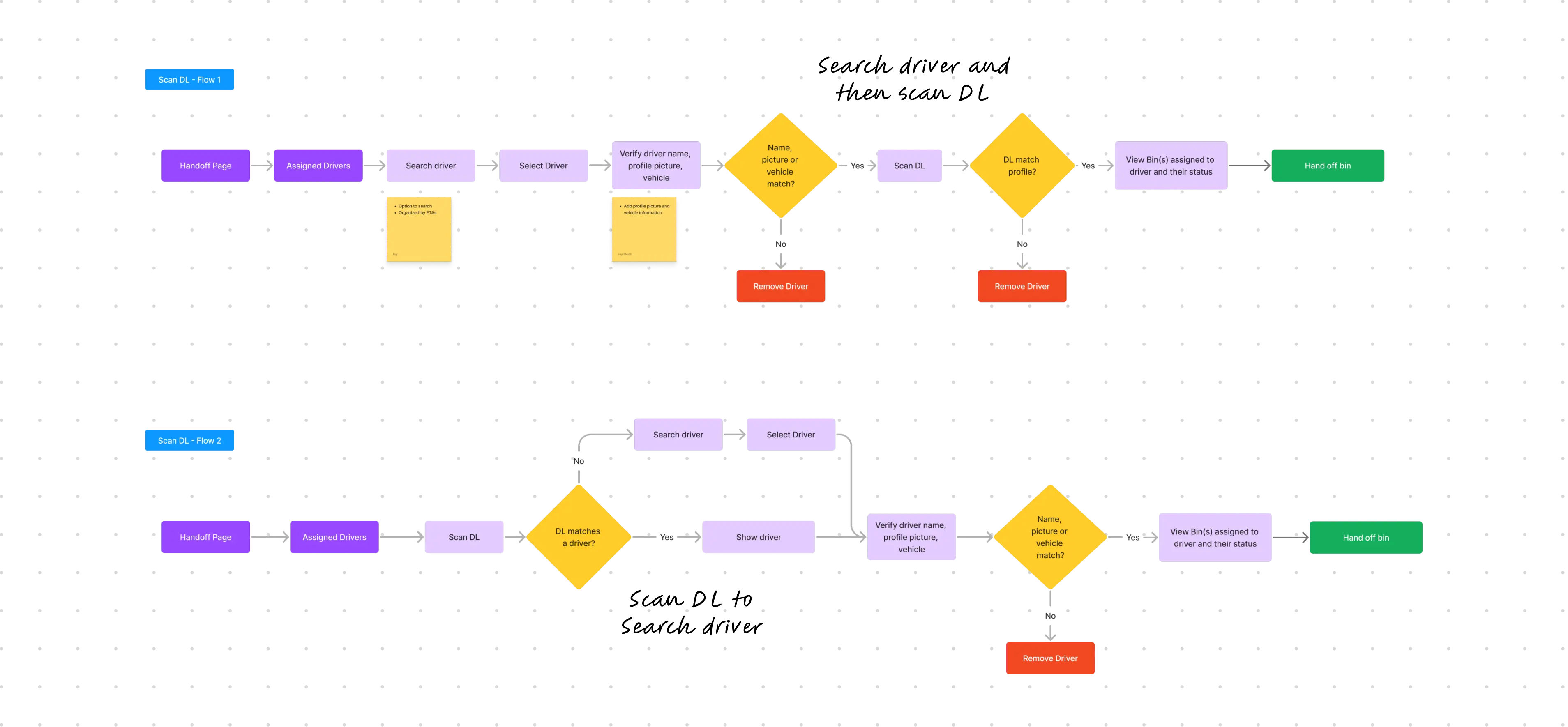
After defining the design requirements, I mapped two possible flows for supporting in-app driver
license verification.
The first flow required employees to find the driver and then scan the license to verify the driver.
The second flow used the license scan to not only verify the driver but use license scanning to
search the driver.
While the second flow was preferred because it reduced manual search, license-based driver
lookup
was not reliable enough at this stage. I moved forward with the first flow to search for
the driver and then use the license scan as a verification step. To make that path faster, I added
search to
help employees quickly find the right driver profile.
Sketches & Wireframes
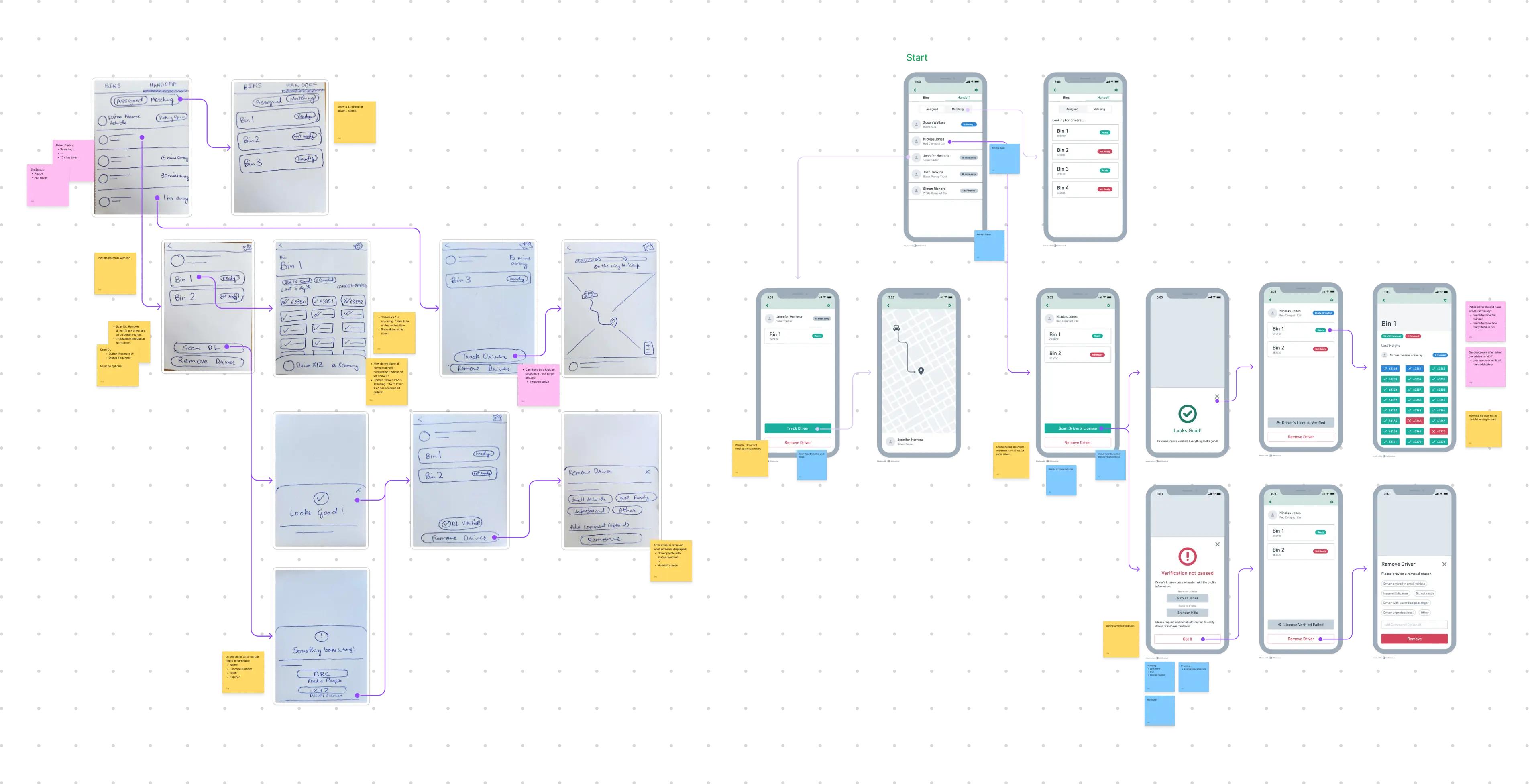
After finalizing the flow and design requirements, I created sketches to explore the interaction
experience. I converted the sketches into low-fidelity wireframes to collect feedback from
cross-dock
employees and engineering stakeholders before moving into high-fidelity design.
Turning Point
I reached out to the Drive Product team to understand how license verification works. Through deeper
evaluation, we found that parsing scanned license data is unreliable as license
formats vary across
different states. From a employee’s perspective, this introduces the risk of false
positives, not only blocking driver verification but also undermining trust in the
process.
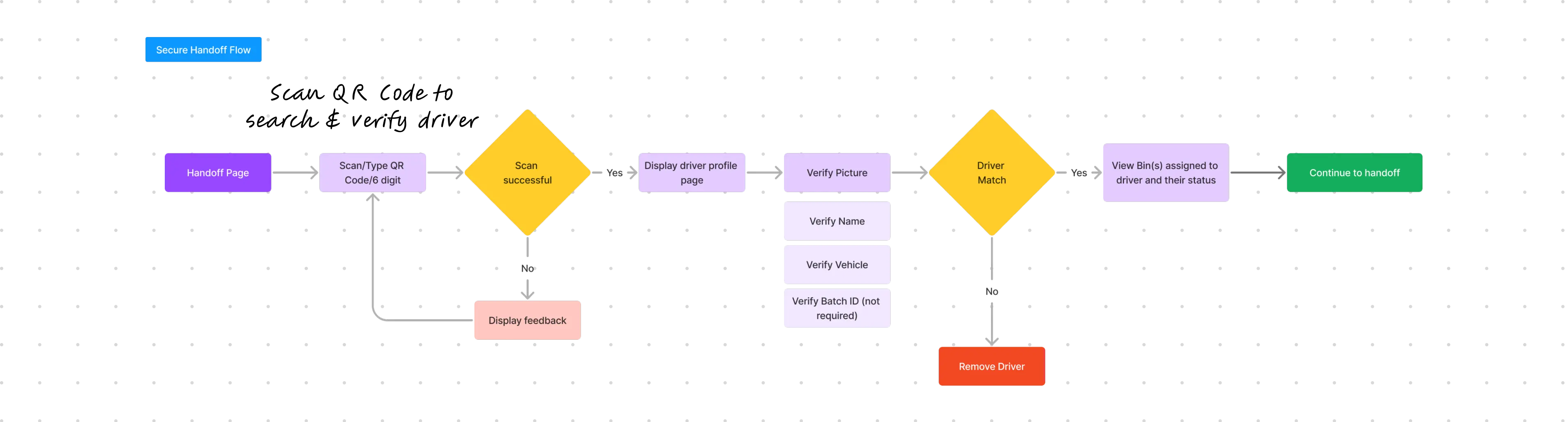
At the same time, the Drive Product supported a Secure QR Code feature that could be used to
verify
drivers more reliably. As a result, we moved away from scanning driver licenses as the
primary
verification method and I redesigned the user flow to use Secure QR Code for driver verification.
Secure QR Code for driver verification
Solution
I designed an improved handoff experience to help cross-dock employees verify drivers, confirm
bin assignments, and handle common pickup exceptions such as driver removal.
Redesigned Handoff Page
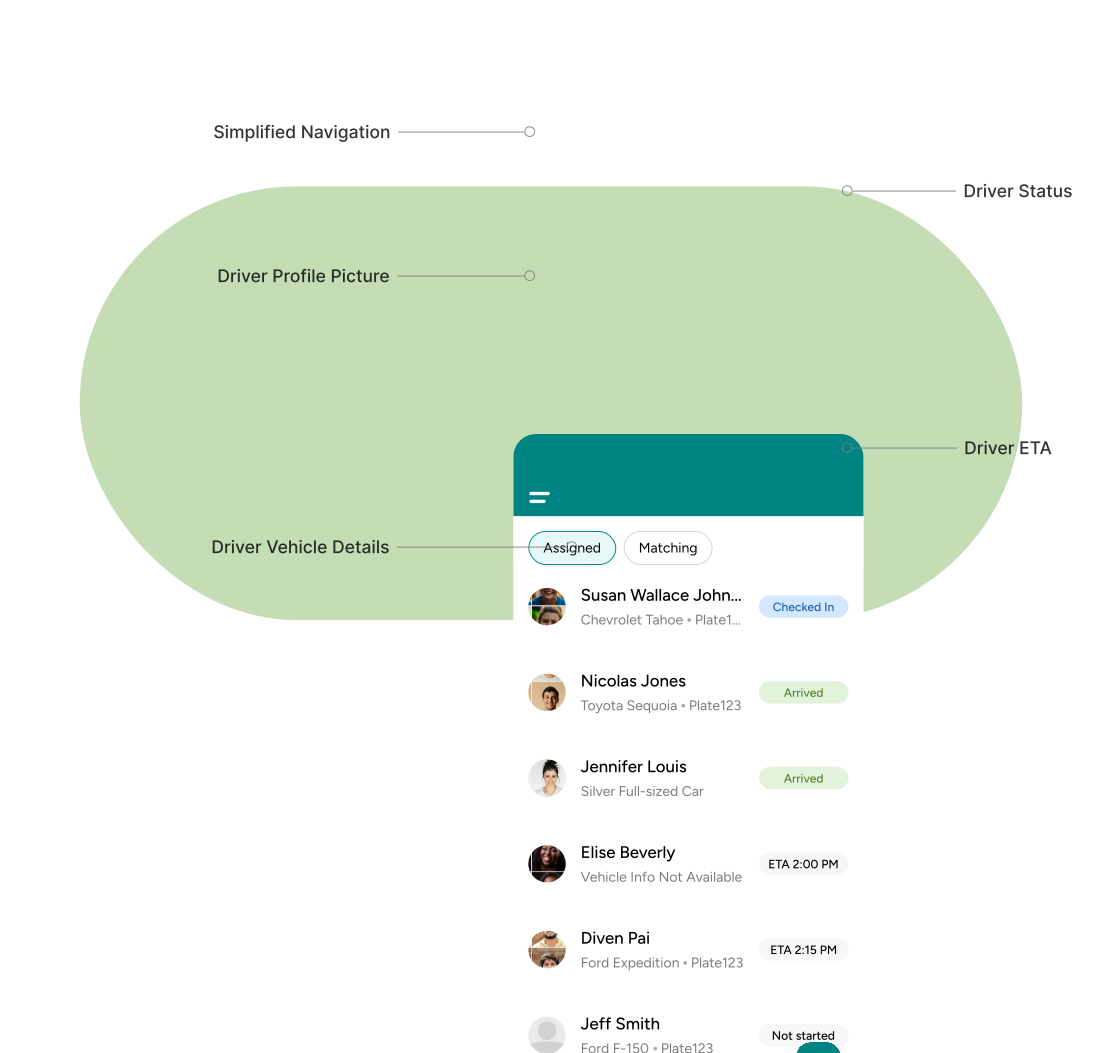
I redesigned the handoff page to centralize the information employees needed before starting a
pickup. The new list combines driver status, ETA, profile photo, and vehicle details so
employees
can quickly identify the right driver and understand who is ready for handoff.
Driver Verification
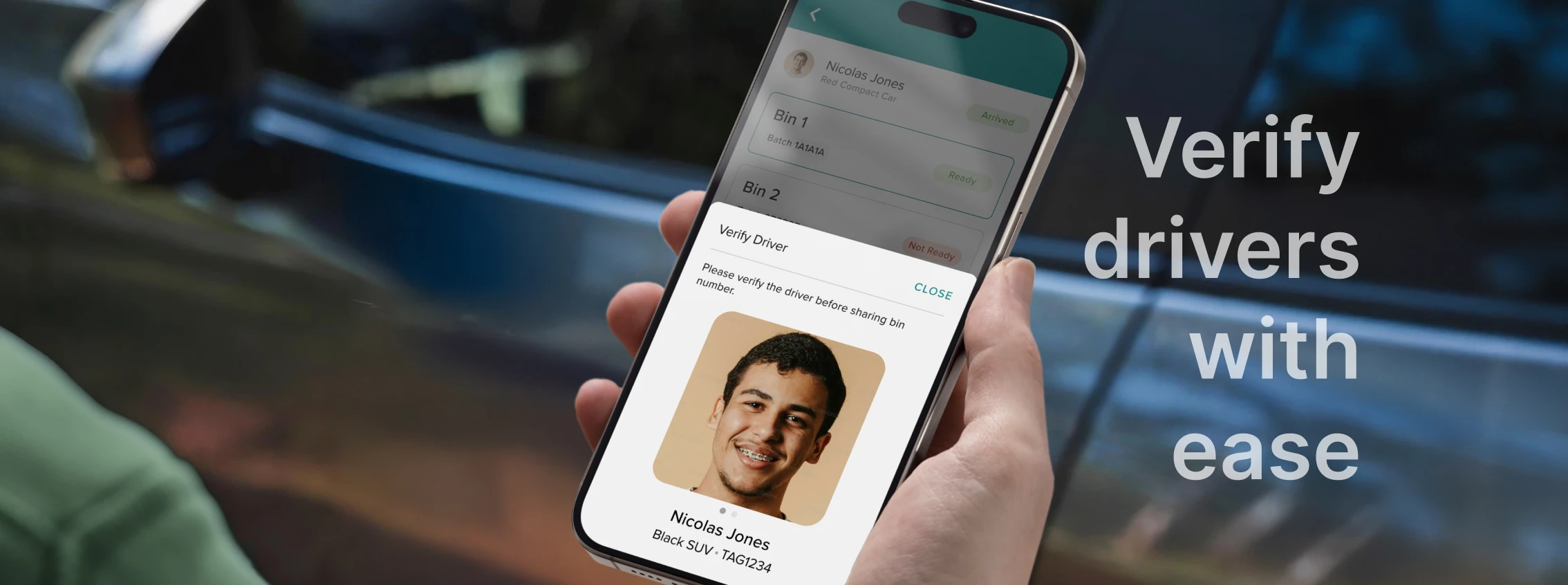
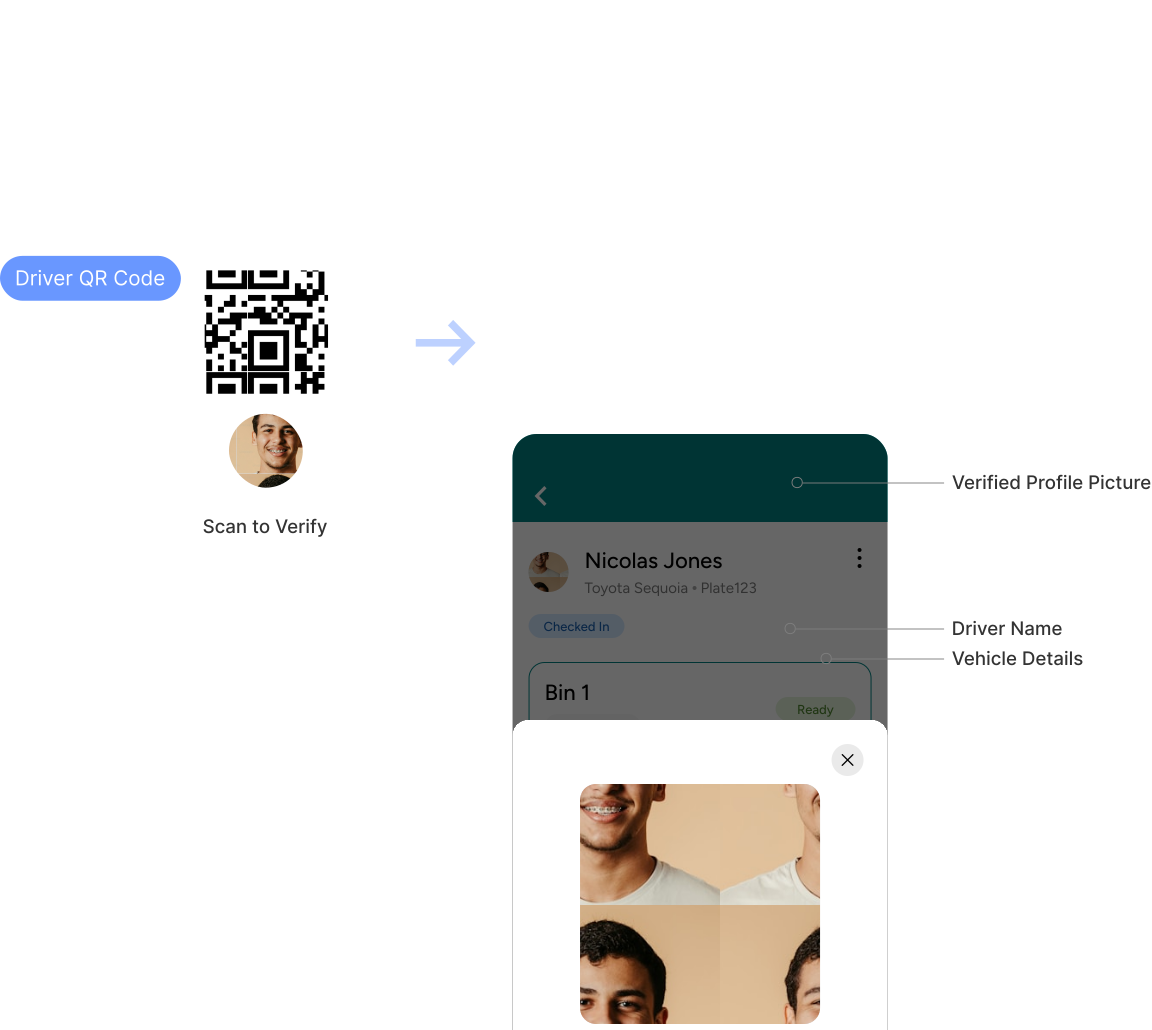
Instead of relying on scanned license data, the redesigned flow uses Secure QR Code scanning to
verify the driver. After scanning, employees can confirm the driver’s profile picture, name, and
vehicle details before continuing with handoff.
Driver Profile
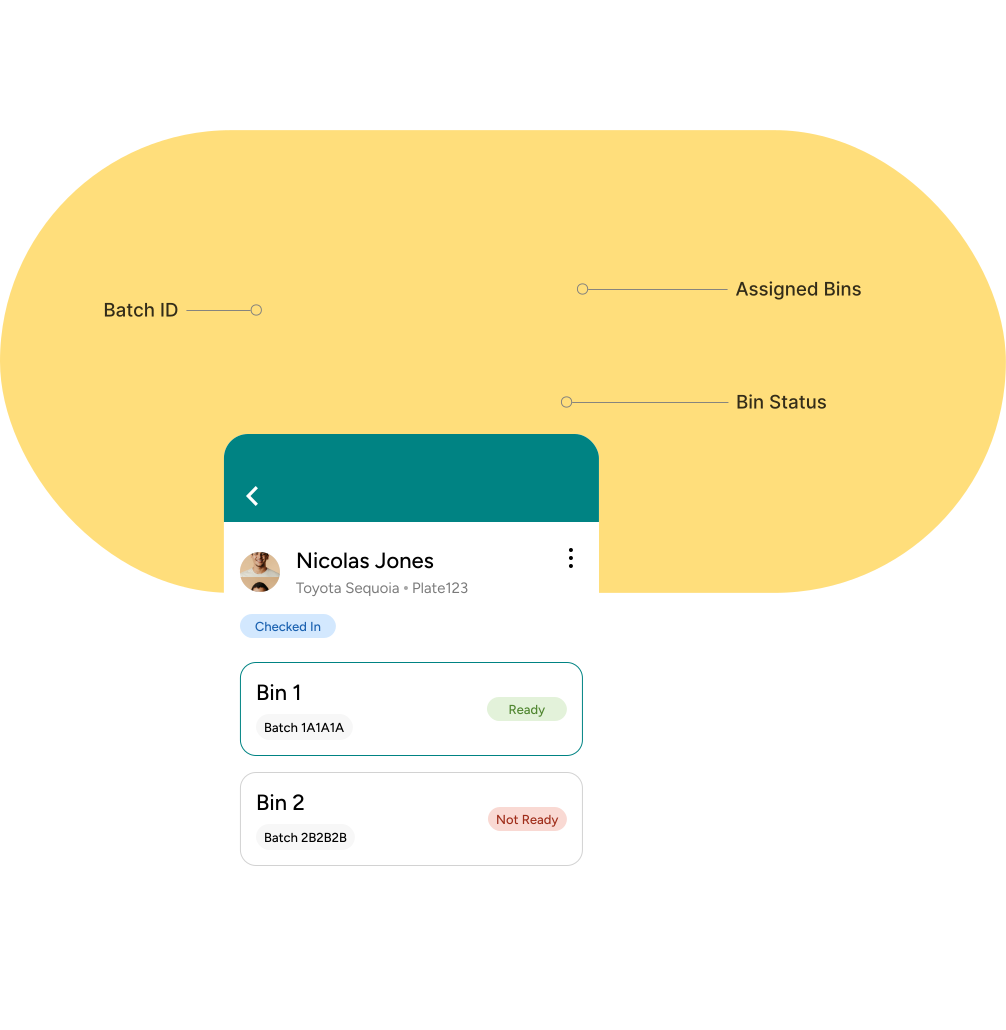
The driver profile groups assigned bins under the selected driver, making it easier for
employees to verify which bins belong to the pickup. Each bin shows its batch ID and readiness
status so employees can quickly confirm whether the pickup is ready to proceed.
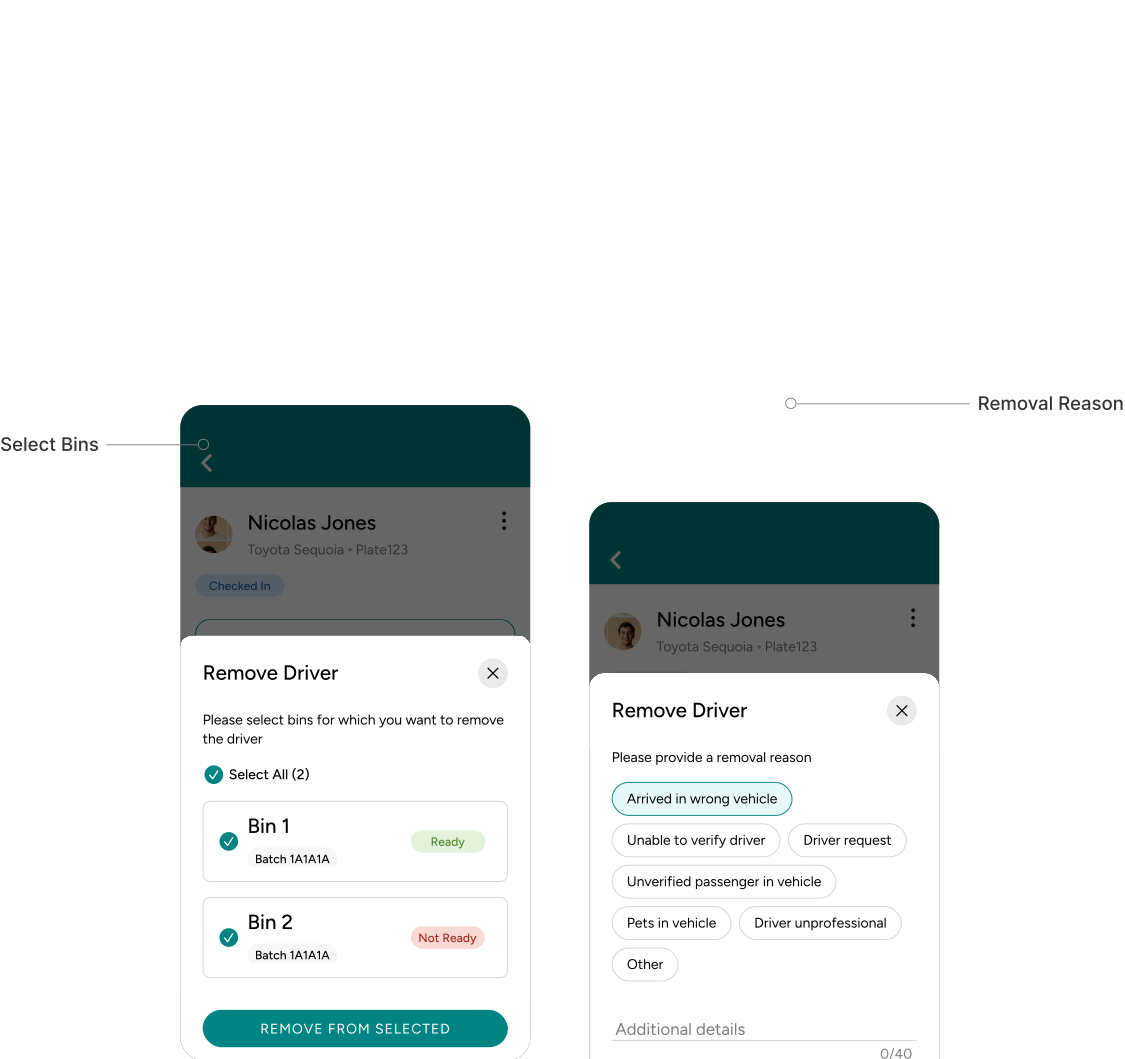
Driver Removal
I added driver removal flow so employees could resolve common pickup exceptions without
escalating to Support. Employees can select which bins to remove the driver from and provide a
removal reason with additional details that can be reviewed later.
Usability Tests
I conducted usability tests with cross-dock employees and on usability platforms using interactive
prototypes to validate the revised handoff flow. Feedback primarily focused on UI
refinements such as
button position and surfacing vehicle details like license plate information.
Importantly, the feedback on the core flow was positive and users were able to complete all tasks
successfully.
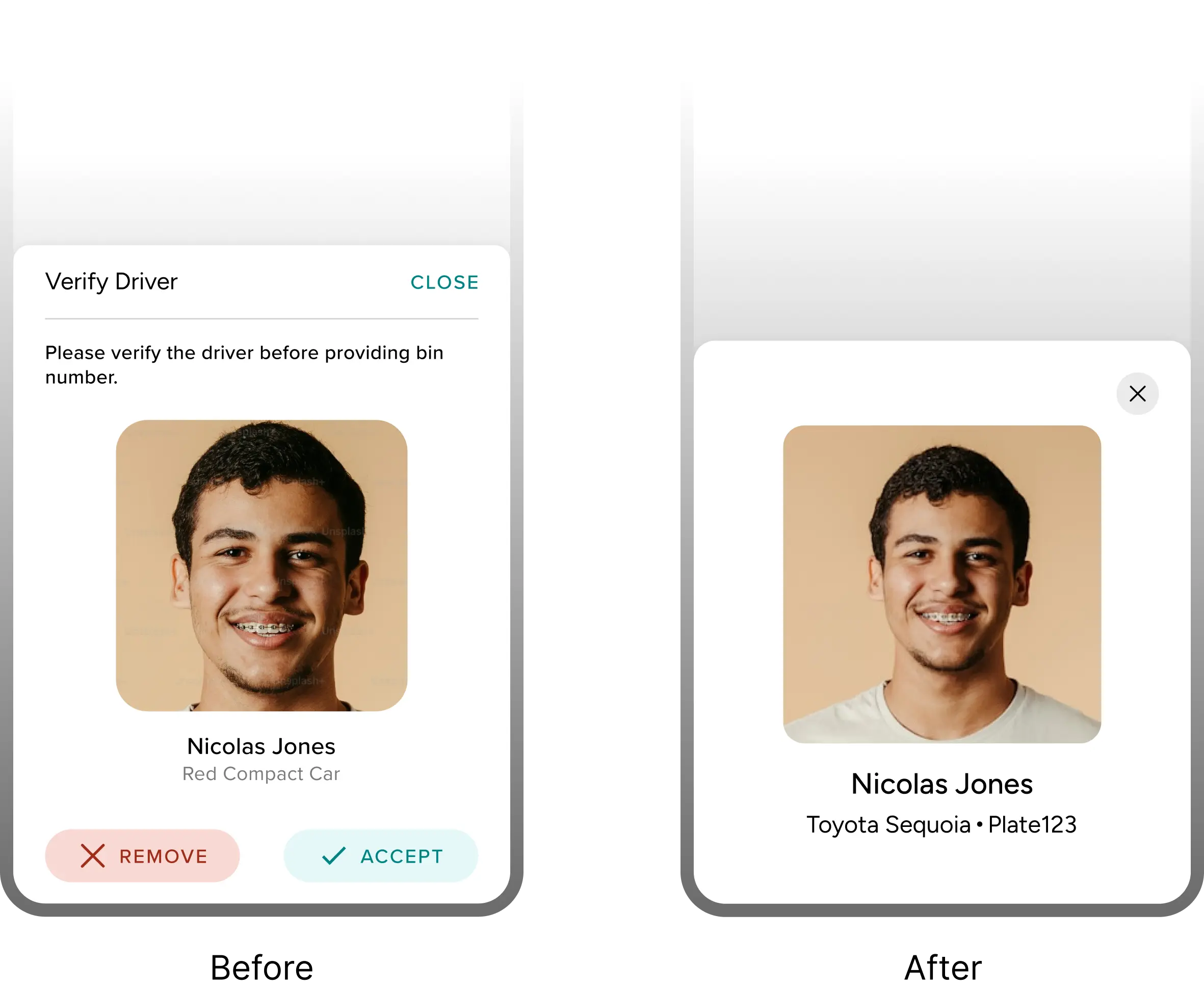
Refining the Verification Flow
Although users did not raise concerns during testing, I later found an ambiguity in the
verification step that required user to select between two options: Accept or Remove. If
an employee
initially marked a driver as “Accept” but later noticed a discrepancy, it was unclear how the
earlier confirmation should be interpreted. While the step was originally intended to
support
verification, it risked confusing users in the real world.
To reduce confusion, I removed the explicit “Accept” action. Instead, the final design presents the
verified driver details for review, while keeping removal as the clear exception path if something
does not match.
Design Outcomes
After the redesigned handoff experience was implemented and deployed in facilities, cross-dock
employees were able to verify drivers more quickly, confirm bin assignments with more confidence,
and resolve common pickup exceptions without escalating to Support.
50% improvement in pickup efficiency
The new experience replaced fragmented driver lookup and manual license verification with
Secure QR Code scanning. Cross-dock employees can now search and verify drivers quickly.
Reduced Support escalations
Employees could remove drivers and resolve common exceptions without waiting on Support.
Staging and handoff became more efficient
To our surprise, employees began using arrival times to stage bins in the order drivers were
expected to arrive. This has helped facilities reduce driver wait times.
Takeaway
This project reinforced the importance of framing the right problem before designing the solution.
While the business needs were clear, the real opportunity came from understanding how cross-dock
employees made decisions during pickups.
By understanding the operational workflows, I was able to design a solution that supported driver
verification, bin confirmation, and exception handling.
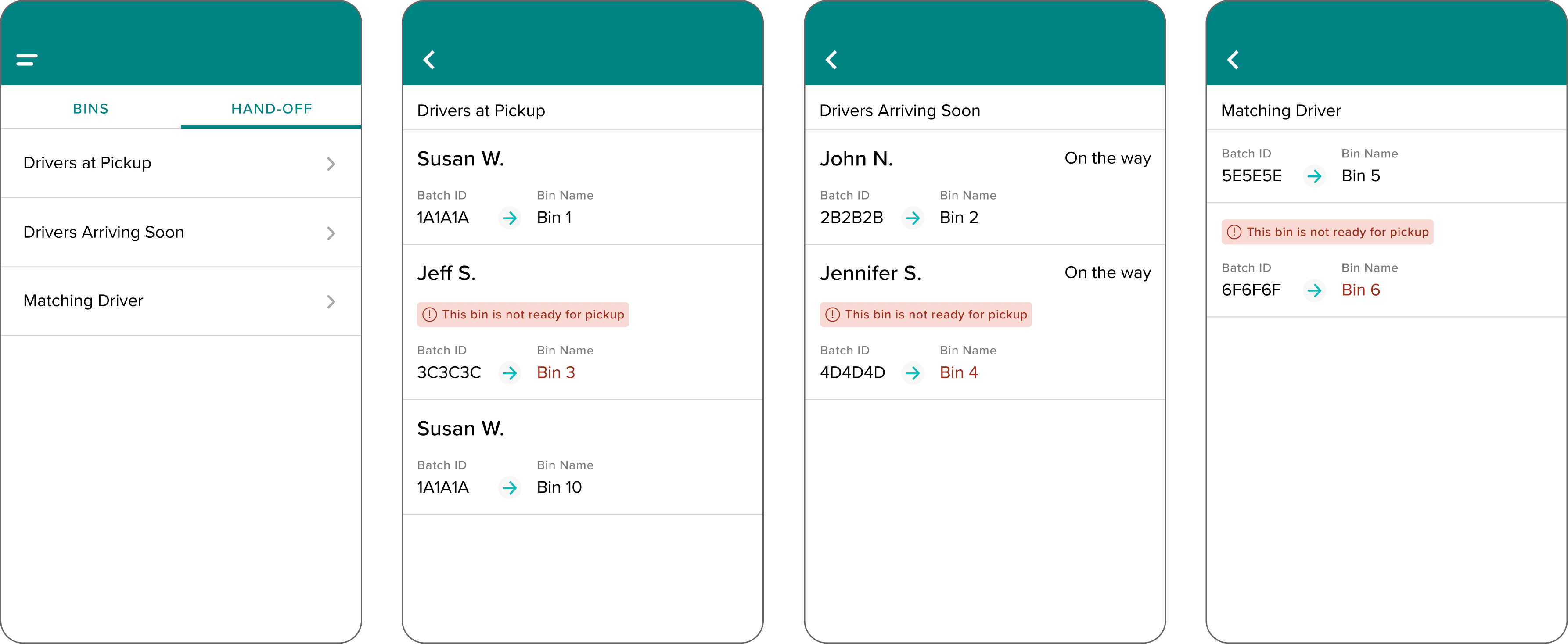
Current Design
Cross-dock employees use SmartSort app to view Driver information. It has three sections
-
Drivers at Pickup, Drivers Arriving Soon, and Matching Driver.
While the existing design does a good job at showing the bins assigned to drivers and
calling out if a bin is ready or not for pickup, there are too many sections that user
needs
to go back and forth between. User cannot also tap to view Bin details. The new handoff
experience tries to overcome these limitations.